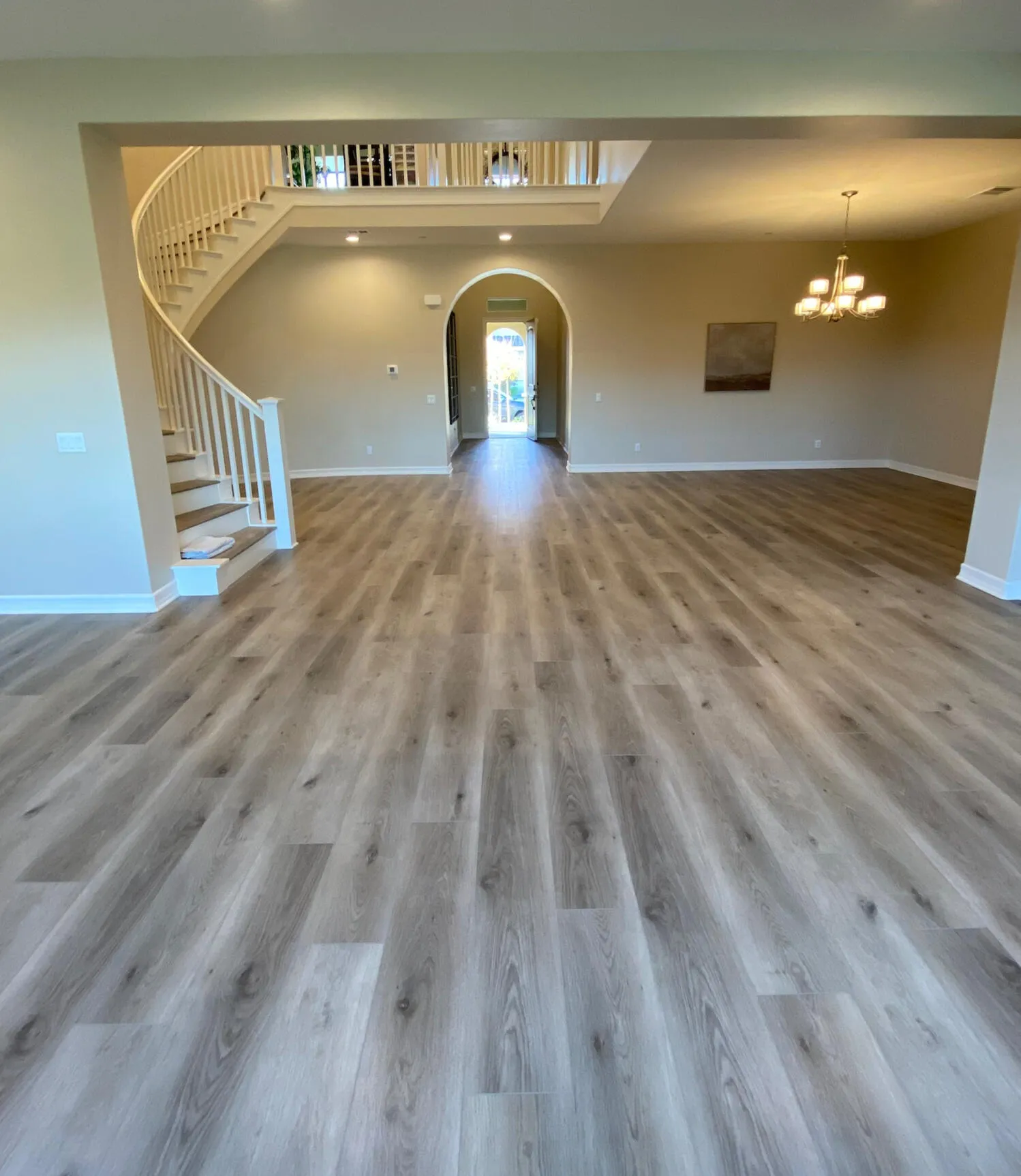
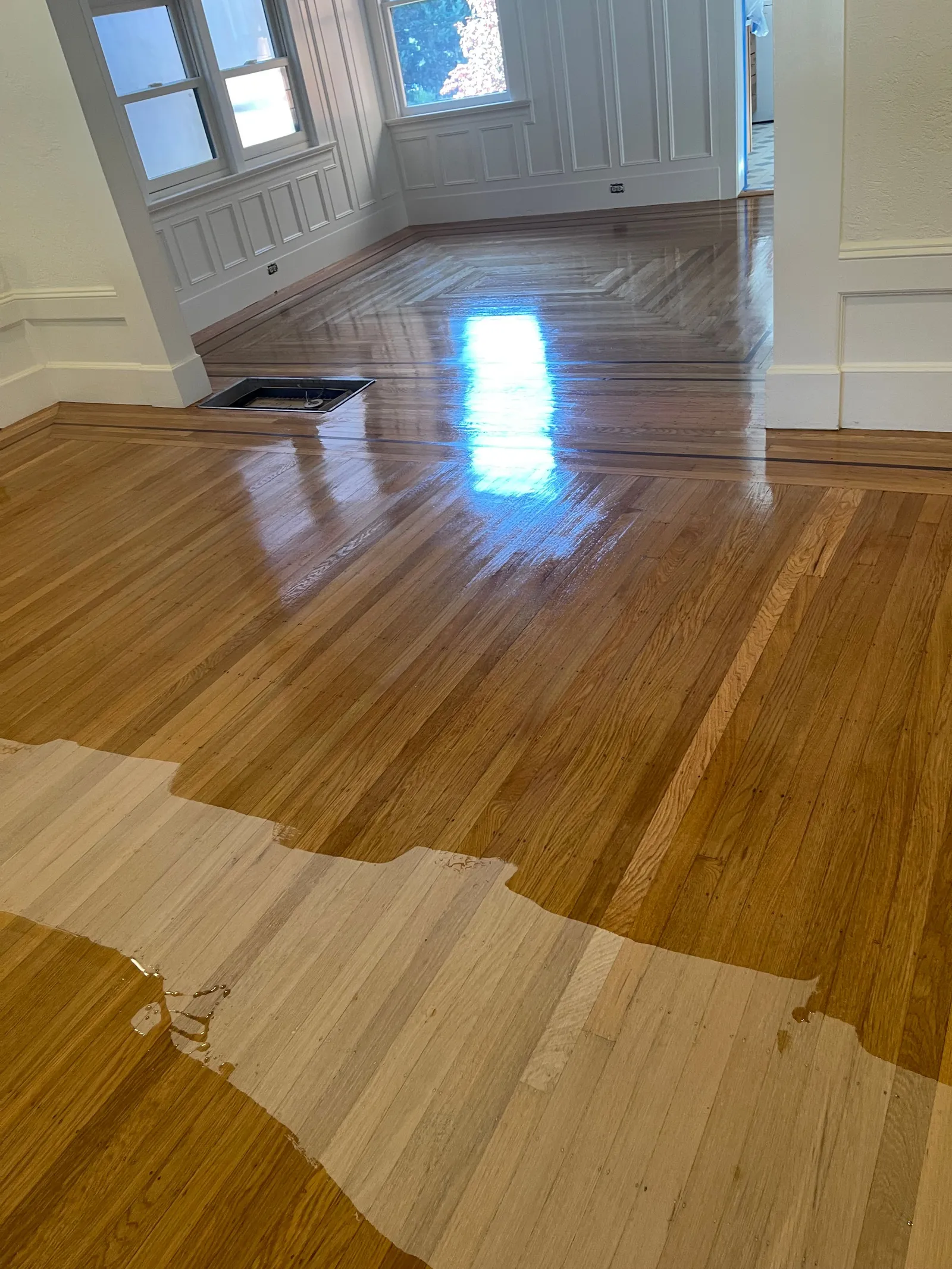
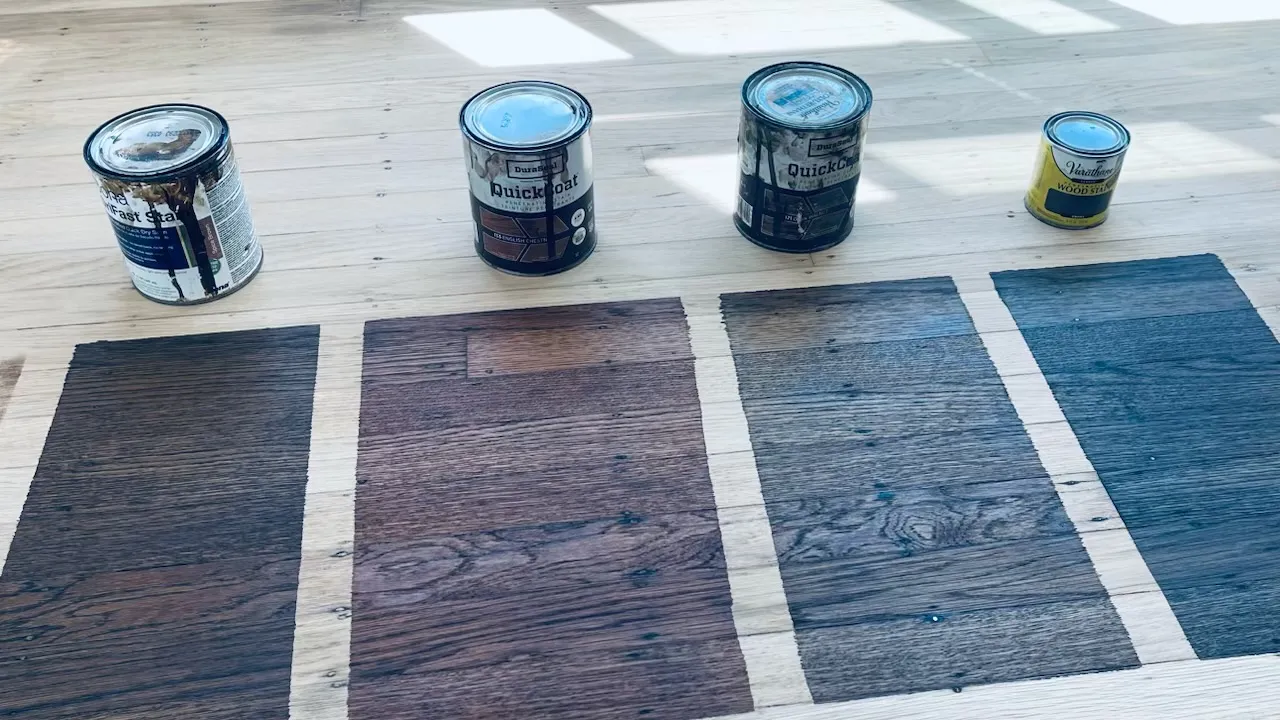
If you're picking new floors for an Oakland home, you've probably landed on two finalists: solid hardwood and luxury vinyl plank (LVP). Both look great. Both come in dozens of styles. But they're fundamentally different materials — and the right one depends on your rooms, your lifestyle, and what you want the floor to do over the next twenty years.
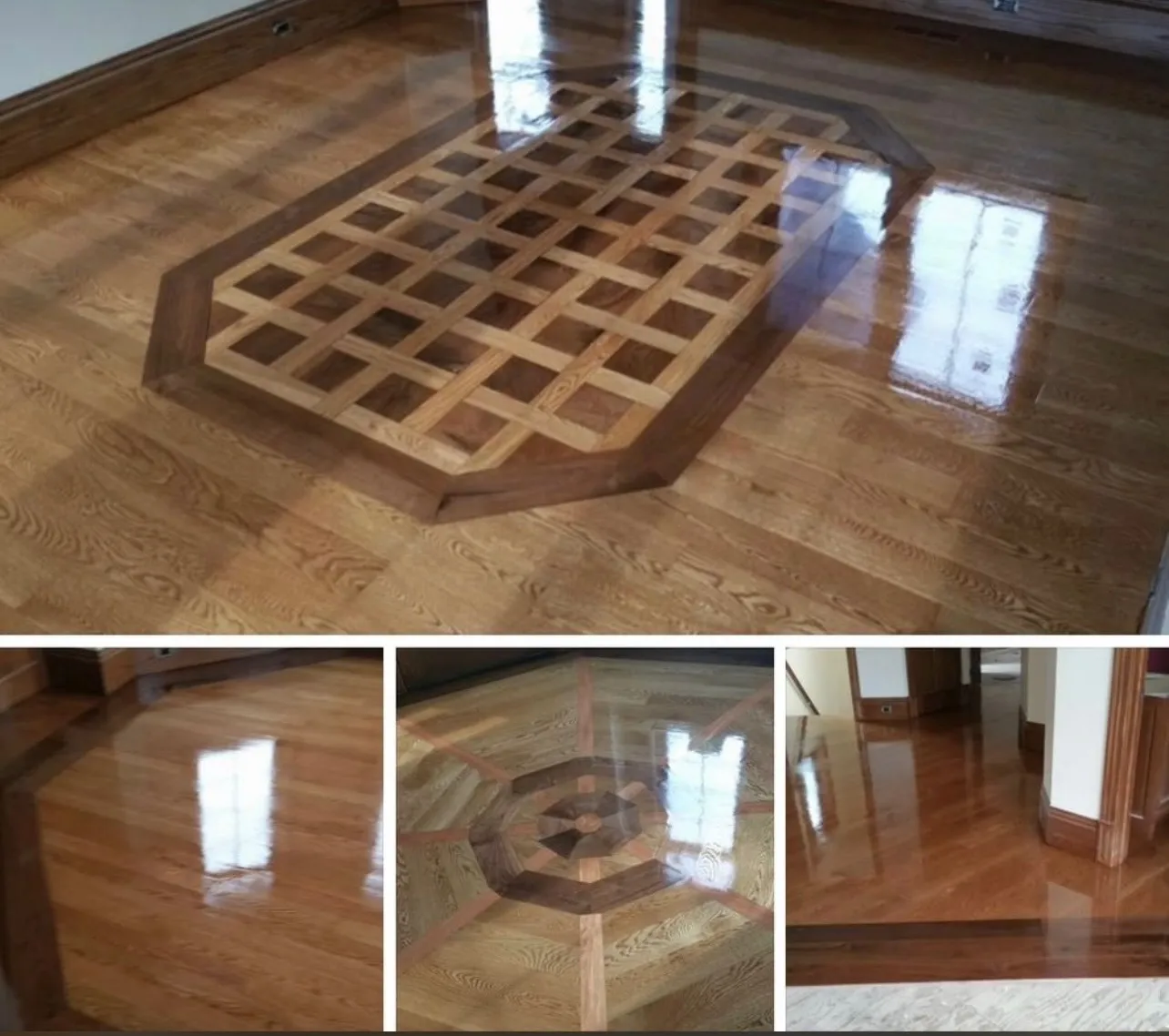
The biggest decision in Oakland flooring
We install both every week, so this isn't a brochure comparison. Here's an honest four-dimension read on where each material wins — durability, moisture resistance, cost, and resale value — based on what we see in East Bay homes over years of install and return visits.
Durability — how they handle real life
Hardwood is hard, but not indestructible. Solid oak or walnut will dent if you drop a cast-iron pan. Dogs with long nails scratch it over time. High heels leave marks. The redemption: hardwood can be sanded and refinished multiple times. A well-maintained hardwood floor lasts 75-100 years — and when it shows wear, you refinish it and it looks brand new. LVP is engineered for a different job: its clear wear layer shrugs off scratches, dents, and stains that would mark hardwood. But when LVP does get damaged, you can't refinish it. You replace the plank.
Long-term renewable
- Dents from impact — cast-iron pans, dropped tools
- Scratches from long dog nails, high heels, sliding furniture
- Refinishable 3–5 times over a lifetime
- 75–100 year lifespan with normal maintenance
- Shows character as it ages — not wear
Day-to-day invincible
- Scratch-resistant wear layer — dogs, kids, toys, no problem
- Dent-resistant on SPC rigid core
- Stains wipe off without a mark
- 15–25 year lifespan, then replace planks
- Looks new day one, looks new year ten
LVP for day-to-day scratch resistance. Hardwood for long-term renewability. Pick based on who's in the house and how long you're staying.
Moisture resistance — critical for Oakland homes
This is where the two materials actually diverge. Oakland's Mediterranean climate means mild wet winters and dry summers, and many older homes — especially in the hills — have slab-on-grade construction or basement-level rooms where moisture is a constant concern. Hardwood and water don't mix: solid wood expands when it absorbs moisture and contracts when it dries. In a bathroom, laundry room, or below-grade space, hardwood will cup, warp, or buckle. Even in main living areas, a broken dishwasher hose can ruin a section overnight.
LVP flips the entire equation. The core is plastic composite, not wood fiber, so water has nothing to absorb. You can mop it, spill on it, install it in a bathroom or basement, and it won't swell, warp, or delaminate.
Dry-room only
- Absorbs moisture — cups and warps over time
- Expands in humidity, contracts in dry heat
- Not suitable for bathrooms, laundries, basements
- One appliance leak can ruin a whole section
- Slab-on-grade homes need a vapor barrier + engineered, not solid
100% waterproof
- SPC core does not absorb water
- No expansion / contraction with humidity swings
- Safe for every room — kitchen, bathroom, basement
- Survives standing water for hours without damage
- Goes over slab without a vapor barrier — IXPE handles it
LVP, decisively. If your space has any moisture exposure, hardwood is a liability and LVP is the right answer.
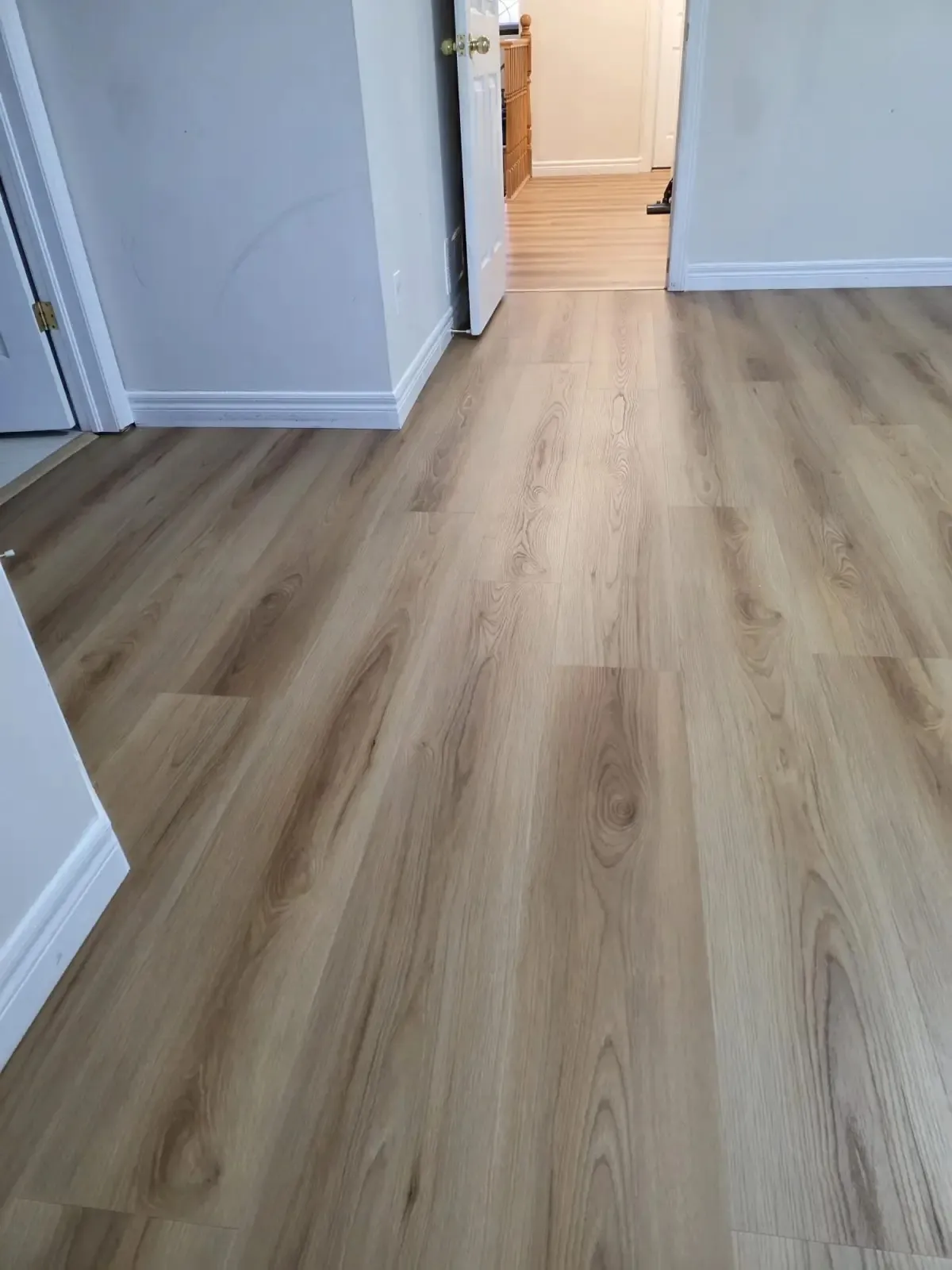
Cost — real numbers on a 1,200 sq ft home
Here's what the three categories look like installed on a typical 1,200 sq ft Oakland project — all in, including demo, subfloor prep, transitions, and trim:
1,200 sq ft installed — Oakland market
- Solid hardwood — 1,200 sq ft $14,400 – $21,600Oak at the low end, walnut and exotics at the top
- Engineered hardwood — 1,200 sq ft $8,400 – $15,600Standard to premium European oak
- Premium LVP / SPC — 1,200 sq ft $9,600 – $13,20020mil+ wear layer — the tier we install
Need a more specific number? Our cost calculator gives a ballpark in 60 seconds based on your square footage and material.
We install both every week. We'll tell you honestly which one your house is asking for.
Resale value — what Oakland buyers notice
In the East Bay real estate market, hardwood floors are a selling point. Agents consistently report that homes with hardwood sell faster and for more. In Rockridge, Temescal, Montclair, and across the Craftsman-heavy neighborhoods, buyers expect hardwood — it's part of the architectural character. High-end LVP has come a long way and is genuinely hard to distinguish from real wood from four feet away, but at inspection time, buyers notice. Hardwood is perceived as premium; LVP is perceived as practical.
The selling-point material
- 70–80% ROI at resale in Oakland
- Expected in Craftsman, bungalow, mid-century homes
- Character ages with the house
- Ranks near the top of buyer "must-have" flooring lists
Practical upgrade
- 50–60% ROI at resale
- Better than old carpet or damaged laminate, but not a flag for listing agents
- Renters and first-time buyers read it as a net positive
- Neutral in most Oakland neighborhoods — doesn't help or hurt
Hardwood wins on resale. If you're investing in a home you plan to sell in the next 10 years, it's the stronger move for the rooms that matter most.
Our recommendation — by room and use case
There's no single right answer — it depends on your space. Most Oakland homes benefit from a mix: hardwood where it shines, LVP where it earns its keep.
- Living rooms, dining rooms, bedrooms — Hardwood if your budget allows. Forever floor. See our hardwood options.
- Kitchens, bathrooms, basements, laundry rooms — LVP. Moisture resistance isn't optional in wet areas. See our LVP options.
- Rental properties — LVP. More durable against tenant wear, cheaper to replace a damaged plank, waterproof against whatever the last tenant did.
- Whole-house on a budget — Premium LVP throughout gives you a consistent wall-to-wall look at a lower price point with zero moisture worries.
- Older Oakland homes (Craftsman, bungalow, Victorian) — Hardwood in the main living areas to match the home's character. Check under carpet first — the original may still be there.
The best play for most Oakland homes is a hybrid: hardwood where it shines, LVP where it makes sense. We plan the mix on the walk-through and quote it all in.