Spring in the Bay Area is the trickiest time of year for hardwood floors. The wet winter air has dried out, the summer heat hasn't fully taken over, and indoor humidity can swing more in eight weeks than it does the rest of the year combined. If a floor is going to show a problem, this is usually when it does. Here is what to watch — and what's worth doing about it.
Why spring is the season that moves your floors
Solid hardwood is hygroscopic — it absorbs and releases moisture from the surrounding air, constantly. In winter, Bay Area homes run wetter: storms, closed windows, less heat, more humid indoor air. In summer, the marine layer keeps things mild but indoor air dries out as windows open and the sun bakes the rooms. Spring is the bridge — and the swing.
For most of the year, the change is gradual enough that a properly-acclimated floor handles it without complaint. But April through June moves the moisture content in your boards faster than any other window. If a floor was going to develop a problem, it usually shows up in those eight weeks.
What the wood is actually doing
Hardwood expands across its width when it absorbs moisture and contracts when it dries out. The grain runs lengthwise, so the boards barely change in length — but they can move roughly 0.3% per board for every 1% shift in moisture content. Spread over a 20-foot run of 5-inch planks, that's a quarter-inch of movement easily.
When it's working as designed, the floor stays flat and the gaps between boards stay invisible. When it's not, you see one of two patterns: gapping (the boards are drying and pulling away from each other) or cupping and crowning (uneven moisture across the thickness of the board, usually because moisture is reaching it from one side and not the other).
Too little moisture in the room
- Hairline gaps between boards — visible in raking light
- Boards feel tight against baseboards or door trim
- New squeaks in rooms with forced-air vents
- More pronounced on solid plank than engineered
- Worst by sunny windows and heating registers
Too much moisture reaching the boards
- Board edges higher than centers — cupping
- Centers higher than edges — crowning, usually from above
- Sticky finish underfoot in humid weeks
- Staining near plumbing, exterior doors, or crawlspaces
- Subfloor moisture above 12% on a meter is a red flag
Both are reversible if caught early. Both become refinish-or-replace problems if ignored through the year.
Three checks you can do this season
If you have hardwood and haven't looked closely at it lately, these are the three things worth a five-minute pass through the house.
- Look at the gaps with raking light. Stand at one end of a hardwood room, get low, and look down the length of the boards. Late-afternoon sun coming in from the side works perfectly. Hairline gaps that you can fit a business card into are normal for solid hardwood in dry weeks. Gaps wide enough to lose a coin into are a sign the indoor air is drying the boards more than they should — and a sign you should run a humidifier in those rooms through summer.
- Sweep your hand across the surface. The boards should feel like one flat plane. If you can feel the edges of individual planks as ridges, the boards are cupping — too much moisture is reaching them from below. If you can feel centers rising and edges low, that's crowning, and it usually means surface water sat too long.
- Check the spots near plumbing, exterior doors, and over crawlspaces. These are the first places trouble shows up. Look for staining, swelling near transitions, or boards that have darkened to a different shade than their neighbors. Catching it here means you can fix the source before the rest of the floor follows.
What to do if you find something
Most spring hardwood symptoms are reversible if you catch them in the first eight weeks. The cause is almost always humidity-related, which means the fix is the same: stabilize the air around the floor.
The target is indoor relative humidity between 30% and 50% year-round. Most Bay Area homes drift into that band on their own. But:
- In wet winter spells, run an exhaust fan or crack a window during cooking and long showers.
- In dry windows — windy late-spring days, heat waves, central heating on — run a humidifier in rooms where you spend the most time.
- If you have forced-air HVAC, change the filter. Clogged returns dry rooms out faster than people realize.
- Then watch the floor for two or three weeks. Most movement reverses as the room normalizes.
If a board has cupped severely, water-stained, or you can see daylight between planks across an entire room, that's past the wait-it-out stage. Time to get someone in with a moisture meter and a real look at the subfloor.
If you catch hardwood movement in spring, you usually get to keep the floor. Wait until fall and you're often deciding between refinish and replace.
When a refinish or replacement enters the picture
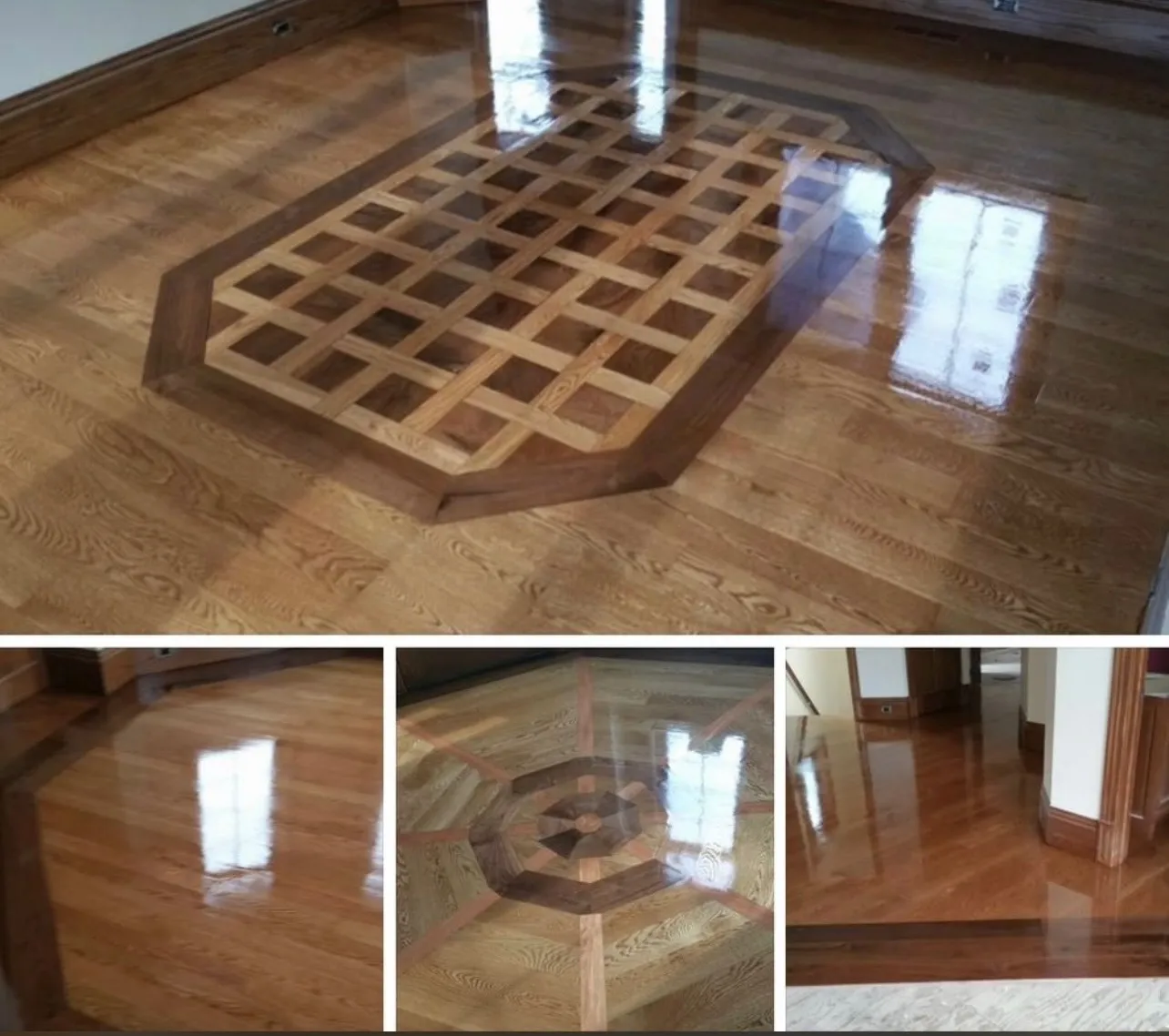
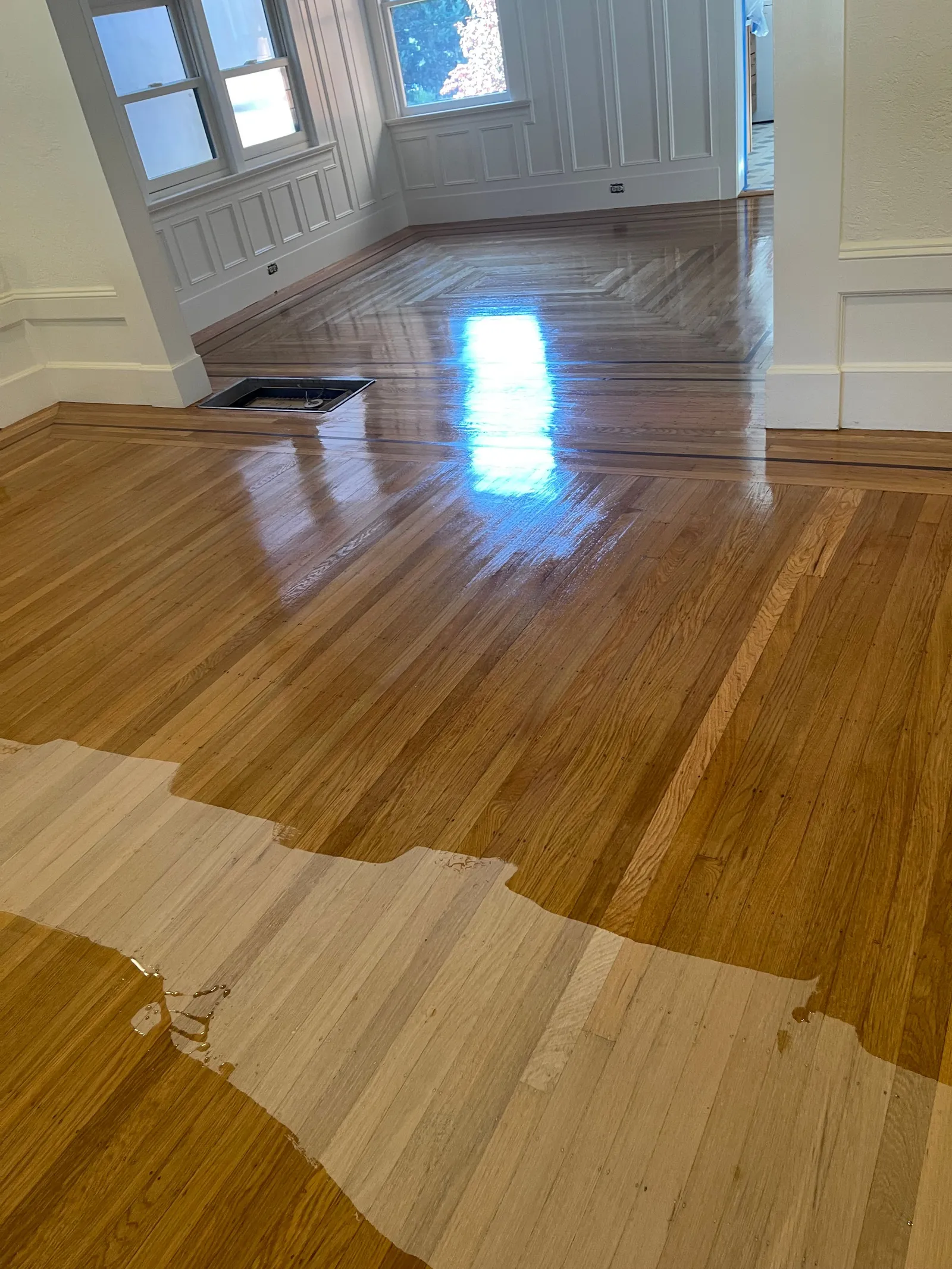
Surface symptoms — light gaps, mild cupping that relaxes, visible wear in traffic lanes, dulling finish — these are refinishing territory. A full sand and refinish flattens minor cupping, fills hairline gaps with stain-fillable wood filler, and restores the protective layer. Most Bay Area hardwood floors are good for three to five refinishes over a lifetime.
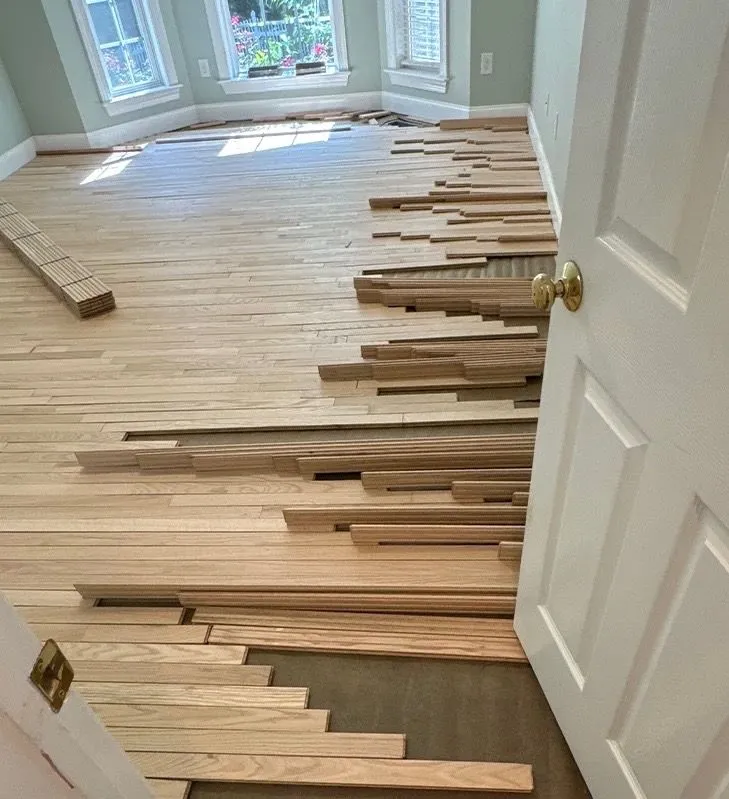
When the symptoms go beyond the surface — boards splitting, subfloor moisture that stays high after the season normalizes, structural cupping that doesn't relax, or large stained areas around appliances — refinishing won't reach the root cause. You're looking at section replacement or full replacement, and the source (a slow leak, an unsealed crawlspace, a failed vapor barrier) has to be addressed first or the new boards will repeat the cycle.
The decision between refinish and replace usually doesn't have to be made in spring. If the symptoms are recent and the floor was healthy six months ago, give it through summer first. Our full refinish vs replace decision guide walks through the threshold in detail.